
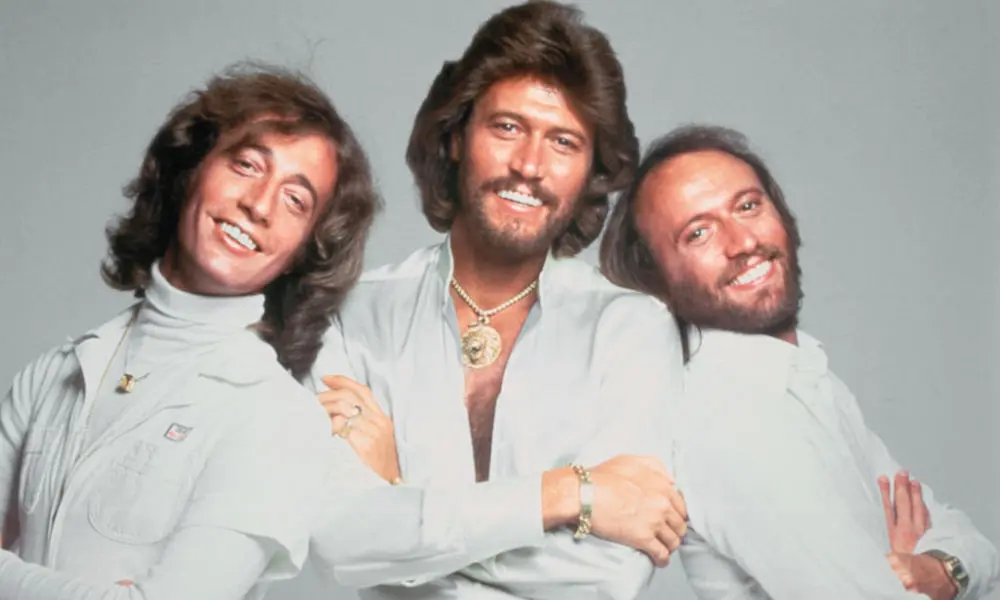
Few band names seem easier to explain than the Bee Gees.
Barry Gibb. Robin Gibb. Maurice Gibb. Three brothers with the same last name, singing together for more than four decades. Obviously, “Bee Gees” must be a phonetic spelling of “BGs,” meaning “Brothers Gibb.”
It’s a perfectly logical explanation.
It’s also not how the name started.
The real story goes back to Australia in the late 1950s, when the Gibb brothers were still children trying to find anywhere they could perform. It involves a speedway outside Brisbane, a man named Bill Goode, and a radio DJ who happened to have one of the most famous names of the computer age decades before anyone had heard of Microsoft.
His name was Bill Gates.
The initials “BG” were everywhere. The Brothers Gibb connection came later.
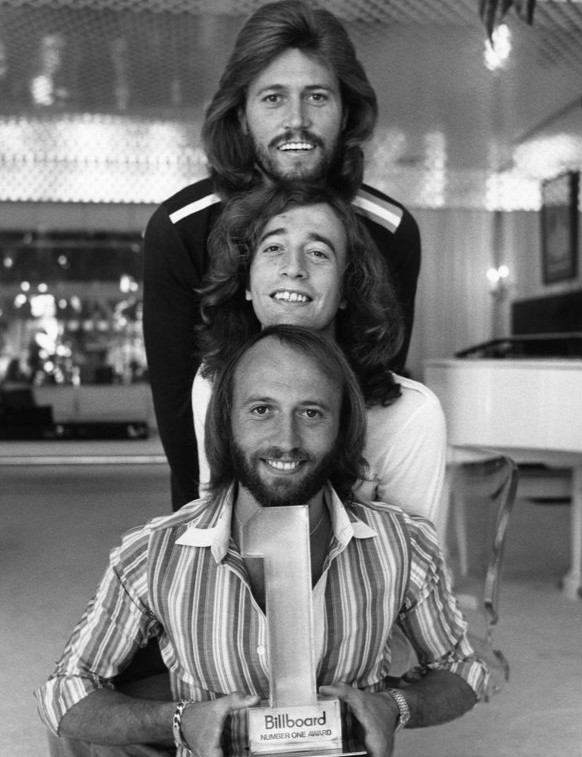
The Common Myth: “Bee Gees” as Short for “Brothers Gibb”
The popular explanation isn’t exactly nonsense. “Brothers Gibb” eventually became associated with the Bee Gees name, and it’s easy to understand why.
Barry, Robin and Maurice Gibb were brothers. They performed together. Their surname began with G. Calling the Brothers Gibb the “BGs” seems so obvious that the story practically explains itself.
The problem is chronology.
According to the Bee Gees’ official history of the name, “Brothers Gibb” wasn’t its original meaning. The group’s first version of the name was “The BG’s,” and those initials came from several people involved in the brothers’ early Australian career. Only later did the name evolve into “Bee Gees” and become associated with “Brothers Gibb.”
The myth stuck because it fit so well that there was little reason for anyone to question it.
The truth requires going back to Queensland.
The Real Story: A Speedway, a Promoter, and a DJ Named Bill Gates
The Gibb family emigrated from Britain to Australia in 1958, settling in Redcliffe, Queensland, northeast of Brisbane. Barry was 11 years old. Twins Robin and Maurice were eight.
The brothers were already performers, and they soon began looking for opportunities to sing around their new home.
One of those opportunities came at Redcliffe Speedway.
The boys performed between races, sometimes collecting money thrown by spectators. Their harmonies caught the attention of Bill Goode, a racing driver and promoter associated with the speedway. Goode thought the boys had something and contacted a friend in radio.
That friend was Bill Gates.
Not the future Microsoft co-founder, who was still a toddler in the United States. This Bill Gates was an Australian radio personality who recognized the potential in the three young singers. Gates later remembered being particularly impressed by how good their natural harmonies sounded even through the speedway’s primitive public-address system.
Then came the initials.
There was Barry Gibb.
There was Bill Goode.
There was Bill Gates.
BG. BG. BG.
Gates began referring to the group as the “BGs.” The Bee Gees’ official account specifically identifies those shared initials as the origin of the name. The spelling eventually developed into the familiar “Bee Gees.”
It makes the story considerably stranger than simply shortening “Brothers Gibb.”
One of the most recognizable group names in popular music emerged partly because a young Barry Gibb happened to meet two Australian men whose initials matched his own.
Before They Were the Bee Gees: Their Earlier Band Names
The Bee Gees didn’t begin in Australia. Barry, Robin and Maurice had already been performing together in Britain.
Their earliest proper group was The Rattlesnakes, a skiffle and rock-and-roll outfit formed in Manchester during the 1950s. Barry played guitar and sang, while Robin and Maurice provided vocals. Friends Paul Frost and Kenny Horrocks completed the early lineup.
One of the defining stories from this period came during a planned appearance at the Gaumont cinema. The boys intended to mime along with a record, as children sometimes did before Saturday matinees. The fragile record was broken before the performance, leaving them with a choice: abandon the appearance or actually sing.
They sang.
The audience response convinced them that performing for real was considerably more interesting than pretending. The Bee Gees’ official history describes the experience as an important early turning point in their determination to pursue music.
When Frost and Horrocks left, the Gibb brothers adopted another wonderfully 1950s name: Wee Johnny Hays and the Bluecats, with Barry taking the role of “Johnny.” Sources also record variations including “Wee Johnny Hayes and the Blue Cats.”
They were also known for a time as Barry and the Twins, an accurate if somewhat unimaginative description of the lineup.
Then the family moved to Australia.
The speedway performances, Bill Goode and Bill Gates provided the circumstances for another change. “The BGs” gradually became “Bee Gees,” and this time the name stayed.
Why the “Brothers Gibb” Story Stuck Anyway
The misunderstanding is almost inevitable because “Brothers Gibb” became such a perfect description of what the Bee Gees were.
Bill Goode wasn’t part of the group. Bill Gates wasn’t part of the group. As the brothers became successful, the people represented by the original collection of BG initials disappeared from the public story.
Barry, Robin and Maurice remained.
The name therefore acquired a new and much more obvious meaning. Even the group’s official website acknowledges that “Brothers Gibb” eventually became associated with the Bee Gees name, despite not being its original source.
Their career made the reinterpretation even more convincing.
The Bee Gees became one of popular music’s great family acts. Their sibling harmonies were central to their identity, whether they were recording orchestral pop in the 1960s, ballads in the early 1970s, the falsetto-driven records of the disco era, or the later songs that returned them to the charts.
Calling them the Brothers Gibb wasn’t merely convenient. It described them perfectly.
It just didn’t name them.
Conclusion
The Bee Gees name is one of those rare cases where the mistaken explanation may actually be more logical than the truth.
Yes, Barry, Robin and Maurice were the Brothers Gibb. Yes, “BGs” fits that description perfectly. Eventually, that interpretation became part of the name’s meaning.
The name itself, however, reaches back to a very different moment.
Three young brothers arrived in Australia looking for places to sing. They performed at a speedway in Queensland, where Bill Goode noticed them and introduced them to radio DJ Bill Gates.
Barry Gibb.
Bill Goode.
Bill Gates.
Three BGs.
From those shared initials came “The BGs,” and from there came the Bee Gees.
Long before Stayin’ Alive, How Deep Is Your Love, Massachusetts or To Love Somebody, one of the biggest names in popular music began with three boys singing at a racetrack and an accidental collection of matching initials.