
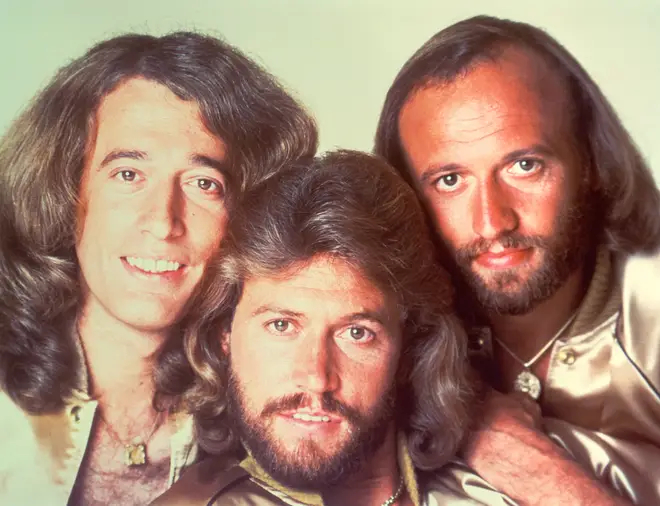
The Bee Gees have sold more than 220 million records, written some of the most recognizable songs in popular music, and left a catalogue that spans everything from orchestral pop to disco, country, R&B, and adult contemporary. Most fans know the big stories: Saturday Night Fever, the falsetto harmonies, and the remarkable songwriting partnership of Barry, Robin, and Maurice Gibb.
But even devoted fans are often surprised by some of the lesser-known chapters in the Bee Gees story. Here are eight fascinating facts that show just how extraordinary their journey really was.
1. Their name has nothing to do with “Brothers Gibb”
It’s one of the biggest misconceptions in music history. While “Bee Gees” certainly fits “Brothers Gibb,” that’s not actually where the name originated.
The group’s early supporters included radio presenter Bill Gates and racing driver Bill Goode. Their shared initials, “B.G.,” combined with the brothers’ own family name, evolved into the name Bee Gees. The coincidence with “Brothers Gibb” was simply too perfect not to stick, and over time it became the explanation most people accepted.
2. “Massachusetts” was written by three guys who’d never been there
Released in 1967, “Massachusetts” became the Bee Gees’ first UK number-one single and remains one of their most beloved ballads.
Ironically, Barry, Robin, and Maurice had never actually visited Massachusetts when they wrote it. The song was originally conceived as a response to the American hippie movement centered around San Francisco, but they flipped the idea on its head, imagining someone longing to return home instead of heading west.
Sometimes great songwriting comes from imagination rather than experience.
3. “Stayin’ Alive” is an official CPR training tool
One of the Bee Gees’ biggest hits has literally helped save lives.
Because “Stayin’ Alive” runs at approximately 103 beats per minute, it’s remarkably close to the recommended rhythm for performing chest compressions during CPR. Medical organizations around the world have used the song as a memory aid for decades, making it one of the few pop songs with an official place in emergency training.
It’s hard to think of another disco classic that doubles as lifesaving advice.
4. Robin Gibb survived one of Britain’s deadliest rail disasters
In October 1967, Robin Gibb was traveling aboard the Hither Green rail service when it derailed in southeast London.
The accident killed dozens of people and injured many more. Robin escaped with bruises and shock, but the experience stayed with him for the rest of his life. It was an extraordinary stroke of luck that one-third of one of the world’s greatest vocal groups survived a tragedy that easily could have changed music history forever.
5. They deliberately wrote gender-neutral lyrics
The Bee Gees understood that a great song should belong to whoever sings it.
Rather than writing lyrics tied too specifically to one perspective, Barry, Robin, and Maurice often chose words that could be interpreted by male or female performers alike. That flexibility made their songs incredibly attractive to other artists and helped explain why their catalogue has been recorded thousands of times across virtually every genre.
Their songwriting was designed to travel.
6. Some of their biggest hits were never sung by them at all
While the Bee Gees enjoyed enormous success as performers, they were equally legendary as songwriters.
Among the many classics they wrote for other artists are Barbra Streisand’s “Woman in Love,” Kenny Rogers and Dolly Parton’s “Islands in the Stream,” Dionne Warwick’s “Heartbreaker,” Diana Ross’s “Chain Reaction,” and Yvonne Elliman’s “If I Can’t Have You.”
Many listeners know every word to these songs without realizing they all came from the same three brothers.
7. Barry Gibb wrote two number-one hits for his brother in one afternoon
Following Andy Gibb’s rise as a solo artist in the late 1970s, Barry helped launch his younger brother into superstardom.
According to Barry, he wrote both “I Just Want to Be Your Everything” and “(Love Is) Thicker Than Water” during the same writing session. Both songs went on to reach number one in the United States, making it one of the most productive afternoons any songwriter has ever had.
Not many people write one chart-topper in a day. Barry Gibb wrote two.
8. They’re the only act with UK Top 10 hits across four straight decades
Very few artists remain relevant for even one decade. The Bee Gees did it for four.
Beginning in the 1960s with songs like “New York Mining Disaster 1941,” continuing through their global dominance in the 1970s, and adding further Top 10 successes during the 1980s and 1990s, they achieved a level of longevity that no other act has matched in the UK charts.
Their ability to reinvent themselves without losing their musical identity remains one of the greatest achievements in popular music.
Conclusion
The Bee Gees were far more than disco icons. They were musical innovators, master craftsmen, and remarkably adaptable songwriters whose influence extends far beyond the songs they recorded themselves.
Whether you’re discovering these stories for the first time or simply being reminded of them, they help explain why the Bee Gees continue to inspire musicians and audiences around the world. More than half a century after their first hits, their music—and the remarkable story behind it—continues to stay alive.